Showing posts with label Education. Show all posts

Friday, October 22, 2010

Why the Anti-Drug Movement should Suck on an Exhaust Pipe and Die: Fact-Checking an Evil Pamphlet


The one subject that pretty much everyone who goes to college learns about is marijuana. Even if you’ve been sheltered from any knowledge about bongs, joints, and hemp in high school, even if you’ve never watched the Dave Chapelle Show or seen a movie Seth Rogen was involved in, by the time you graduate from (or drop out of) college you’re no doubt in possession of a lot of information about pot. You’ve probably smoked it at least once, and maybe have gone through a period when you were smoking a lot, to the point where there’s a towel permanently placed against the bottom of your dorm room door to prevent smoke from leaking out. Even if you didn’t smoke that much, you know that pot won’t kill you, it isn’t that addictive, and after the first few times you get high, it isn’t all that big of a deal. It can make you lazy, it can make you sort of boring to be around (you know this if you’re friends with stoners), and it can make terrible music sound interesting. It doesn’t make you cool, but it doesn’t kill you. After you find all of this stuff out, you either continue smoking pot or—more likely—you grow up and get a job where you can’t get high all that much, or they drug test you, and then you only smoke weed when your kids are out of the house and your old college buddies come over.

It’s easy to forget, after you grow up, all those "Drug Free America" messages that we were bombarded with as children. Remember how they told you one puff of pot would leave you dead in a ditch? Remember the “gateway drug” stuff? That time the retired cop came to your middle school and showed everyone photos of emaciated meth addicts? That stuff is still going on, and the anti-drug crusaders are just as crazy as ever. The proof of this is evident from the pamphlet, "The Truth About Marijuana," which is printed by the Foundation for a Drug-Free World.

Because I had some time to kill, I decided to do some fact-checking on some of the "truths"contained in the pamphlet. All of these are screenshots from the online version of this document, which is handed out to children at schools. I’ll start from the beginning. On page three:


That’s pretty much a commonly accepted fact. Pot is more potent now than it used to be. Is that a bad thing? On page five:


We learn that one joint equals five cigarettes. If that’s true, than the Drug Free World should applaud the increased amount of THC in marijuana, since it takes fewer joints to get you high now, and therefore fewer stoners are getting cancer. But does pot give you cancer? A major study from four years ago said no, and the study’s lead researcher is in favor of legalizing pot. And of course, you don’t have to get high by holding smoke in your lungs. You can cook using marijuana, or you can use a vaporizer to get high. Also on page five we get this embarrassing feature:


Due to bad layout design, schoolchildren will think both “White” and “Widow” are slang terms for marijuana. Actually, “White Widow” is a very potent strain, or sub-variety, of pot. And a “J” is a joint, and a “roach” is the last remnant of a joint or a blunt. None of these are synonymous with “marijuana.” Small errors, but they add up. On to page seven:


Alcohol contains only one chemical? Only if you are drinking pure ethanol, which is a good way to die. If you’re drinking beer, you’re drinking a bunch of different chemical compounds and carbohydrates, not just ethanol, duh. And while it is technically true that weed contains 400 chemicals, everything in the world is made up of many, many chemicals. Coffee has 800 chemicals in it. Does this mean you shouldn’t drink coffee? Just so you know, the 80 chemicals that are unique to Cannibis are called Cannabinoids. Pages eight and nine feature some ominous-sounding statistics. First up:


Because none of these studies are cited by name or date, it’s pretty hard to verify them. (Is that intentional?) But at least one study showed that marijuana was not a commonly-used drug among people who had to visit the emergency room. (That article is from NORML, a pot-advocacy group, so it isn’t unbiased, but still.) On the next page, we start to get to the stuff that makes my blood boil:


For that first “fact,” I could ask what percentage of people is arrested solely for possession or use of marijuana, but instead I’ll just state the obvious: Correlation does not imply causation. A large percentage of robberies is committed by black men—does that mean being a black man makes you rob people? No, and neither does marijuana make you break the law. (Although, given weed’s effects, it probably makes it more likely you’ll get caught by the police if you’re high.)

That second statistic makes sense, since people who drink or do drugs before they’re 15 are likely to become drug addicts. Don’t do drugs if you are a child—your brain is still developing and older teens and adults can take advantage of you if you get messed up. That does not mean adults shouldn’t drink or smoke pot.

Also, don’t smoke pot and drive. Being high means your reactions are slowed. But while driving stoned increases your chance of injury of death, it doesn’t come close to the dangers of drunk driving. This study notes that 2.5 percent of fatal crashes are caused by pot, but 29 percent are caused by alcohol. The two are simply not comparable.


Don’t smoke pot when you’re pregnant. That should be sort of obvious. I have no problem with this page. This page, on the other hand…


Jesus Christ, where to start? Firstly, it should be obvious that those who used cocaine used pot first. Pot is easier to find and much, much cheaper. You don’t go straight to cocaine without having used “softer” drugs. Does that prove that marijuana is a “gateway?” No. And the high you get from cocaine (or heroin, or PCP) is different enough from the marijuana high that not a whole lot of stoners go on to use those drugs as their tolerance builds. They just smoke more pot. As for the last line on the page, the one that says that joints can be dipped in PCP, is just naked fear mongering. Sure, some people sprinkled PCP on joints, but hardly anyone does that, and when you smoke a PCP joint, the problem isn’t that you smoked pot, the problem is you smoked PCP! That’s not as bad as the “testimonial” on the facing page:


Fuck. This. Assuming this is a real testimonial and not fiction, it implies that weed leads to heroin. They can’t make this claim using statistics, so they find a heroin user to make this claim. Plenty of people smoke pot and don’t become heroin addicts. Like Carl Sagan, for instance. Remember him? The famous scientist?

Finally, we get the capper:


The Foundation for a Drug-Free World is unbiased. If someone tells you marijuana is okay, they’re probably a drug dealer with a vested interest in hooking you on pot. Like the pamphlet as a whole, the logic makes sense in a vacuum—unscrupulous drug dealers looking to hook new customers would lie, wouldn’t they?

Maybe some of them would, the scumbags who sell pot to middle schoolers or the guys whole sell crack and heroin. But—take this from someone with, ahem, some “experience”—marijuana pretty much sells itself. A lot of people like getting high, and if you have good weed at good prices, you don’t need to tell a bunch of complicated lies. All you need to do, to sell weed, is to say, “Hey, I have some weed.”

But the pamphlet is right in one sense: When someone tells you some information that sounds suspect, you should look into their motives. For instance, who funds the Foundation for a Drug-Free World? Oh, right, the Scientologists. The people who tell you you have aliens in your head.

No matter the source, this pamphlet is full of lies and half-truths, and it’s targeted at children. It seems to me that honesty, intellectual rigor, and skepticism are good traits to instill in kids, especially in kids who we don’t want using drugs. But this pamphlet, along with many other anti-drug programs, teaches the opposite of those things. It tells children that marijuana leads to heroin, crime, car accidents, and cancer. It tells them they’ll be stupid and have deformed offspring if they smoke pot, and they’re supposed to accept all of that just because the Scientologists told them so. Never mind all of the movies, TV shows, and books that depict marijuana use, rightly, as being not all that bad, the pamphlet must be right, since it’s given to them by their teachers or some other important adult, right?

I hope no school is actively handing out this pamphlet, unless it’s as part of a unit on propaganda. To ask children to believe this is to lie to their faces, and the only thing you’ll end up teaching them is to not trust anything an adult says. Which, actually, might not be that bad of a lesson.
Read more!

Thursday, September 30, 2010

Language Arts Sucks, Revisited

I was just rereading Michael Chabon’s excellent book The Amazing Adventures of Kavalier and Clay and thinking about the circumstances that led me to read it, and my discovery of the whole mess of contemporary fiction authors that have influenced me and whose books I’ve carried in boxes from my parents’ house to my dorm rooms to my apartments. I’m lucky to have found the books I love, thanks to the people (not least my mother) who cared about literature and introduced me to authors they thought I would enjoy, and who turned out to be right. Later on, of course, there were the short story collections I went out of my way to buy, and the writing workshop syllabi that forced me to purchase contemporary fiction, and at present I’m pretty confident in my ability to find authors and stories I will enjoy, as long as I have the time to read them.

While thinking about all of this, I suddenly became enraged.

Why? Because I realized that I had taken seven years, in public middle and high school, of “Language Arts,” which was supposed to teach me how to write but also teach me how to read, and more importantly to point me in the direction of books. I learned something from those classes, I suppose, and god knows my teachers tried their best (well, most of them did), but god also knows that those classes did little to influence my love of reading. It might be accurate to say that my love of reading survived Language Arts classes, that I unaccountably love Shakespeare and 1984 despite my education. Most students don’t, and I often wonder if the way we teach literature is designed to stop students from reading.

I know I’ve written the same post before but fuck, isn’t there a way to teach through contemporary fiction that might engage students a little more than teaching them through ancient fiction? Imagine if I was taught The Fortress of Solitude in one of my AP LA classes in high school. It would have given the teacher the chance to talk about:

  • Race relations in America. I know this subject is often touched on, but the history of blacks and whites usually stops around the time of MLK. Richard Wright is wonderful, but perhaps a little dated on some subjects? (Also, not insignificantly, this book discusses race from a white [Jewish] perspective.)

  • Bullying, intimidation, how you feel when you don’t belong in a neighborhood

  • The music of Bob Dylan, Miles Davis, and a slew of old soul, R&B, and fuck groups like the Supremes, the Four Tops, and Marvin Gaye. How many kids know about the tragic death of Marvin Gaye?

  • A tie-in to Dylan: The practice of Jewish performers changing their names to more “normal” ones. Why was this important? What does Jewish identity mean? Why did black performers not change their names—oh, yes, because they were given slave names by their masters. Whole discussions of the power of naming might ensue.

  • Finally, the idea of superpowers in the real world. What would you do if you had the power to fly? Would you try to fight evil? How? Would you rather be invisible or have the power to fly?

That syllabus for the book I came up with off the top of my head would be far, far, more engaging than any Language Arts class I’ve ever had. With something like Shakespeare, or even Conrad, teachers spend have their time trying to get kids to understand what the fuck they just read, if the kids bothered to read it at all and didn’t give up on the text for being too difficult. (Also, with Heart of Darkness teachers have to wrestle with the question of whether the book is outrageously racist or not.) Would it be too much to ask that teachers teaching literature let their kids know that literature is something that doesn’t just happen in the past?
Read more!

Thursday, June 17, 2010

Why Americans Talking About the World Cup Suck, Part 1


As I've said before, Rick Reilly is probably a nice guy. A sports columnist that full of warm-hearted cliches about sportsmanship and the joys of competition has got to be a decent human being, or at least a rough approximation of a decent human being. But Reilly suffers from a disease that many writers, actors, cartoonists, and other creative types become afflicted with late in their careers—call it the Success Syndrome. When they finally become widely recognized and praised for their work, they lose a little bit of that hunger that made them worthy of recognition in the first place, and they have less of an incentive to break new ground. Some artists, the ones who are motivated entirely by an internal drive, overcome the Success Syndrome and explore new ground—think of the Flaming Lips, for instance. Others seem to get lazy. Watching Jack Nicholson chew apart the scenery in The Departed, or Al Pacino yell his way through any of the nonsensically-plotted thrillers he's starred in, you forget that both of them were some of the best actors of their generation. And if you listen to that recently re-released album Exile on Main Street, you'll be shocked that the Rolling Stones were a great rock band who wrote and recorded great songs before they became victims of the Success Syndrome.

Maybe that's a bullshit theory, but it's the only way to explain Rick Reilly's latest column, which reads as if the author went on a three day crack binge, stole a car, wound up in an Oklahoma City bar where he annoyed the other patrons with overwrought speeches about John Wooden and the “right way” to put on socks, got thrown out of the bar, charged a motel room to his ESPN expense account, and wrote the column in a speed-driven deadline panic while drinking cheap whiskey and watching Spanish-language recaps of the World Cup games before falling asleep with his head in the lap of an underage prostitute. Now, I'm not saying that's exactly what Reilly did—he's probably a good family man blah blah blah—but given the sloppiness and borderline incoherence of the column, it's a distinct possibility.

The basic thrust of the piece is that Reilly has some problems with the World Cup, and has chosen a list of ten of them to comment on. It's sort of like that “Top 10” thing David Letterman does, which incidentally started out as a way for Letterman and his writers to make fun of hackneyed list-based humor. Three of Reilly's ten complaints are actually the same one: he doesn't like the vuvuzelas, which are horns that the World Cup crowds have been blowing continuously during matches—I guess the joke is that Reilly really, really hates the vuvuzelas and can't stop thinking about them, and also can't mute his television.

Reilly's other points are a little less sensical. He thinks the things that players on the bench wear are ugly, he thinks the goalie gloves are ugly, he thinks the World Cup trophy itself is ugly. “It looks like something you'd use to prop open your Tuff Shed door during spring cleaning,” Reilly said, using some drug slang I didn't fully understand. He calls the refs pussies for handing out yellow cards, noting that a card wouldn't stop Rasheed Wallace from punching Carmelo Anthony, which was even more confusing than the Tuff Shed line. They don't hand out yellow cards in the NBA, but they have technical fouls, which are exactly the same thing. Is Reilly complaining about the physical properties of the cards themselves?

Things get more mysterious still as Reilly bitches about how you never know how many minutes exactly are left in a match because of stoppage time. He claims this confuses the players, which sort of seems unlikely. He complains about drawn matches, saying, “All these ties are about as exciting as a Jonas Brothers roundtable on sex.” I would actually be very interested to hear the Jonas Brothers' opinions on sex, but then again I thought that the 1-1 tie between the US and England was a really exciting game.

Of course, there's always the possibility that Reilly was joking. There are a lot of sentences that are supposed to be jokes, I'm pretty sure. He keeps talking about “Ace Young,” who I guess is a widely known singer--maybe Reilly's kid or underaged prostitute is a fan of his? The stuff about vuvuzelas was definitely meant to be a joke. I bet the idea for the entire column originated when Reilly was staring at his bloodshot, dilated pupils in the mirror and repeating “vuvuzela” to himself and realized it was a funny word. Maybe the resemblance to “vulva” made him laugh. Maybe he wrote a whole bunch of jokes about the vulvas of the European players had because they're a bunch of queer trannies who play a sport where nobody won or lost ever and they didn't physically attack the refs, but those bits got cut by his editors at ESPN.

More likely, this wasn't edited at all and Reilly only wrote it because he felt obligated to write about the biggest sporting event in the world. He had no knowledge whatsoever of soccer, however--despite being a professional sports columnist—and watched maybe one game before writing some stream-of-consciousness one-liners that he didn't even bother connecting to one another with transitions. So what if it isn't funny or analytical or anything at all, really, other than a nice example of anti-soccer attitudes held by Americans? Reilly's a famous sports columnist who gets paid enough money to buy all the uncut heroin he wants—he can afford to do work that would embarrass any self-respecting amateur blogger.

World Cup Buzz Kill [ESPN]
Read more!

Friday, May 14, 2010

Why Taking a Forced Gap Year Sucks


The other day I was emailing a friend of mine now living in Portland, Oregon, and I asked him if he had found any work. That's a pretty normal thing to ask the folks in my age/education demographic bracket these days—my bracket being kids in their early 20s who just graduated from prestigious or semi-prestigious universities who are mostly the children of middle and upper-middle class parents. Our bracket is getting the shit kicked out of it. My friend is living with his girlfriend (another bracket-mate, working as a nanny), on food stamps, and writing essays that he hopes to sell for low amounts of money. After sending out application after application via Craigslist and a brief, unhappy stint as a kickball umpire, my anonymous buddy has found work at a “really terrible smoothie shop inside of a gym.” This is a guy who graduated from my school a semester before I did, and who can presumably do something a lot better than telling gym rats exactly how many grams of protein is in the mango-strawberry blend. And he's not unique.

Some of my friends moved back into their parents' houses right after graduation. Others stuck it out in the city of their choice, but they usually got subsidized like a failing financial institution by their parents. Most, feeling the weight of their debt to their parents, took any opportunity to get a job that would give them an independent income—meaning they umpired kickball, scooped ice cream, applied to work at Home Depot just like they applied to Princeton five years ago, and learned the intricacies of government programs like unemployment, Medicaid, and food stamps. A surprising amount of them now play online poker for a living, which means they are smart, math-inclined, and disciplined enough to sit in front of their computer staring at numbers for hours at a time, yet they can't get a job. A whole lot of us work for the census, which is paying good money while it lasts, but knocking on doors like Tim Meadows isn't what we had in mind when we got those fancy degrees handed to us. Some of the people I know are going back to school already, either to get a more “useful” degree or to simply hide out in academia for a little longer.

But enough anecdotal evidence, which any competent economist or SABR-matician will tell you is a bunch of randomly occurring bullshit: here's a page of numbers. The numbers say that despite the progress the economy is making, 16 percent of 20 to 24 year olds are unemployed. That's better than the 16 to 19 year old age bracket, but the job market is always tough on 17 year olds—by the time you're in your 20s, you really should be able to get a job. So why can't my peer group get it together?

As with everything, there are a multitude of reasons. Number one has nothing to do with the economy: a four-year degree doesn't mean what it used to. College enrollment has been rising for decades, to the point where every middle class child is expected to grow up to attend the most expensive university that will have him. We did our duty and went straight from high school to college (which is basically high school where everyone gets laid), and when we graduated and got our piece of paper, we found out that everyone else our age had the same piece of paper, and that a bachelor's degree isn't the ticket to a white-collar job it once was. Even before money turned itself inside out, kids who were too old to really be called “kids” were moving back in with their parents after finding out that graduating from college doesn't automatically make you an independent adult. (The trend even has it's own Wikipedia entry.)

But in these troubling economic times, when “sub prime mortgage” is a part of everyone's vocabulary even if no one knows what it means, it's even tougher for young people to transition from college to a job to a career to an apartment without roaches to the final stage in life when you have kids and multiple bank accounts and don't stay awake late enough to watch The Daily Show. When my graduating class went into the job market we weren't just competing with each other but also with the swarm of older, more experienced workers who had just gotten laid off, for jobs that were getting scarcer and scarcer. Is it any wonder that so many of us are sitting in the basement bedroom where we used to masturbate three times a day as teens, playing poker for a living or scanning and refreshing Craigslist every five minutes?

I don't want to exaggerate—some of my friends, through a combination of luck, perseverance and talent, are doing very well, thank you for asking. But it's worth noting that the government, who is in the business of bailouts these days, hasn't done my demographic any favors. Extending unemployment benefits didn't help, since few of us recent graduates had worked enough hours to claim unemployment in the first place. Cash for Clunkers wasn't designed for people who didn't have cars. And I've yet to understand how the TARP money is going to trickle down to us. Politicians don't really care about young people—for all the talk about how the “middle class” and “small business” are “the backbone of our economy,” no one has mentioned what body part recent college graduates are supposed to be. (But I have a guess.) A while ago I had a daydream that the government would step in and directly create jobs through a new program based on the Works Progress Administration and smart, motivated young people would line up in droves to be part of it, but I guess that would be Socialism, and Socialism is what got us into this mess in the first place. (Wait, what?)

The irony to be found here is that the aspiring artists among my generation are more prepared for this economic climate than the rest of us. Artists expect to go through a period of destitution in their early-to-mid 20s. Hell, they practically look forward to it when they're teenagers. But now everyone is basically a starving artist, and that has created a new and weird hybrid economic caste—raised on middle-class values, educated like the upper-class, and now living below the poverty line. We buy organic food with our food stamps. We break off late-night discussions of Lacan and craft brewing to ask each other if the coffee shop down the street is hiring. We go to the library to use the computer and nod hello to the homeless guys hanging out there. We get mildly embarrassed when the rent check arrives from our parents, but that's wearing off. Most of us did actually work hard in college, and learned some skills that we thought would be useful, but no one is buying what we want to sell.

This sucks, right here.

I have no idea what the long-term impact of our demographic's mini-depression will be. At best, I suppose, we'll just be late bloomers when it comes to starting careers, buying homes, and raising kids. (Actually, at best we will rise as one and seize the country in the grip of revolution, but that's not happening.) At worst...who knows? Maybe twenty years down the road, ours will have turned out to be a generation of filing clerks and coffee serves who have whole libraries of unused knowledge in their heads. But I hope not.
Read more!

Wednesday, April 21, 2010

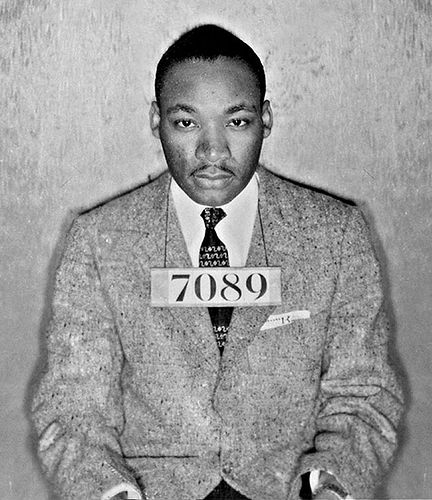
Things That Don't Suck: Martin Luther King, the Extremist


I probably don't need to convince you that Martin Luther King Jr., who was assassinated 42 years ago this month, was a good person. We take a whole day off in honor of his birthday. We teach our kids about the “I Have a Dream” speech and the march on Washington. There's a street named after him in nearly every major American city. We know that he wanted us to judge people not on the color of their skin, but by the content of their character, and we can all pretty much agree that that was a good thing to say. A poll from last year showed that 86 percent of Americans had a “favorable” opinion of King, a number that seems shocking low—who are the 14 percent of people who don't like MLK?

There's a movement to build a monument to King in Washington DC, which is something that we might have thought to do a while ago—with all the memorials to wars and fallen soldiers and founding fathers who were also slave owners, there isn't a single monument that references segregation. Just as importantly, maybe the monument will encourage people to find out more about the man. We're not in danger of forgetting about MLK, but there has been a sort of smoothing out of his beliefs in the popular imagination. When people think about King, what comes to mind is sort of a warm, soft glow of brotherhood, a suffusion of hopeful idealism. Worse than that, as time goes on, some of us may start thinking about him as someone who opposed segregation in the South, winning that battle but dying in the process.

Liberals who lionize him tend to forget that he was, most importantly, a Christian, and that his Christian beliefs informed his activism; Republicans who praise him (sometimes, one suspects, to prove that they aren't racist) tend to forget that he was decidedly a liberal; and we all tend to forget that while he lived, King was an extremely divisive figure who wasn't as popular as he is now. A lot of us (especially white liberals) imagine that we would be participating in sit-ins and marches, that we would be “freedom riders” and stand up to the racist southern sheriffs and their dogs, but not many people made that difficult choice at the time. King might have been an idealist, he might have believed in nonviolence, but we should remember that he was willing to go to jail for his ideals, he was willing to have dogs sicced on him and rocks thrown at him for his cause, and to follow him and do what he did was a hard road to travel.

We should remember, too, that he was committed to fighting all kinds of injustice, not just segregation in the South. The “I Have a Dream Speech” gets attention every January, but what about the speech where he denounced the Vietnam war and refered to the Vietcong as “brothers?” What about his campaign to fight poverty in Chicago, for which he moved into a tenement slum and where he found some of the most vicious, violent racism he ever encountered? What about the last cause he was involved in, the garbage workers' strike in Memphis? To reduce MLK's life to a campaign against Jim Crow is an unfair reduction and worse than that, it implies that the problems he fought are a thing of the past. What would King say about the recent anti-Mexican anti-immigrant bill in Arizona? What would he say about the exploitation of third-world workers, or the Guantanamo detainees? The planned MLK memorial depicts an unsmiling King gazing off into the distance, and this seems about right.

Teaching kids about King's life and work is important, but let's not stop at “all men are brothers.” Let's use King's life to teach that, among other things:
-Authority figures, even and especially the police, the church, and America itself can be wrong.
-“A nation that continues year after year to spend more money on military defense than on programs of social uplift is approaching spiritual doom.”
-Sometimes it's possible to change an unjust status quo, sometimes it isn't, but it's your responsibility to change things.
-"The question is not whether we will be extremists, but what kind of extremists we will be."
-Dreams are good to have, but you don't get things done by dreaming.

(To learn more about the MLK memorial and to donate to it's construction, go here.)
Read more!

Friday, March 19, 2010

Why Trade Schools Suck


You've seen the commercials on the subway, or on the bus if you aren't fortunate to live in a city with a subway system. Or you've seen them on TV early in the morning or around noon—the unemployed hours, when the ads are sandwiched between informercials for new kinds of paper towel dispensers and exposes on the lifestyles of the fat, semi-literate and slutty.

The commercials are for different companies and schools—Phoenix, ITT, DeVry—but the ads are all basically the same. There's the Ordinary American (sometimes appealingly multi-racial, sometimes a recent immigrant, always low-income) describing how he became the successful middle-class person you see before you wearing a tucked-in button-up shirt. This explanation is intercut with images of them repairing computers, organizing files at a doctor's office, or simply staring at a computer screen in a well-lit office like the well-paid professional he is. How did he become such a tower of mundane achievement in the IT or Dental Hygienist fields? Why, by acquiring a degree from [name of college] in [name of field of study] of course!

What these trade schools promise is a practical education that will let you get a job immediately after graduation. The programs may be expensive—thirty thousand dollars for a one-year program sometimes—but you make so much money as a chef or a car mechanic afterwards that you can pay off your debts in a year or two and anyway, you'll get financial aid, so you don't need to worry about it.

That story that recruiters tell students is basically a big fucking lie, as the New York Times reported last weekend, in an article that reminded me why newspapers are more useful than your typical piece of kindling. These schools are for-profit institutions that push their product like Pepsi or Altria, and they make most of their money off of the federal government, which provides grants for education whether or not that education is worthwhile or not.

Now, you can have a long, complicated argument about how useful a four-year degree from a major university is, and a compelling case can be made that the degree itself isn't nearly as useful as the connections and the experience navigating withing systems that you get on your way to a degree. Certainly my degree—a BFA, for the record—isn't worth the price of the paper it's printed on, and neither are general “Liberal Arts” degrees or a wide variety of undergraduate degrees that are issued by institutions more expensive than DeVry or Phoenix. These degrees are luxury items that may provide some measure of knowledge or (in a perfect world) happiness, but they won't help you get a job.

But no one gets a Liberal Arts degree or a BFA with the expectation that it will get them a job. Liberal Arts majors aren't being targeted by TV ads and recruiters and told that they can turn their material fortunes around by spending a lot of money at Dartmouth or UC Berkeley. And most of those big-name universities don't exist solely for undergraduates; they conduct research, they fund graduate programs—if you want to get pretentious about it, they are depositories of the accumulated knowledge of humankind.

These trade schools are not depositories of the accumulated knowledge of humankind. They are a product of a tricky business model that figured out a way to get money from the government and their students at the same time, and as long as they don't explicitly promise good jobs after graduation—which would be illegal, since that would be lying outright—they can go on operating the same way they always have.

What's so objectionable about DeVry and ITT is not their clever business model, but their incredible cynicism. They basically sell themselves as the means to the American Dream—the bootstraps that hard-working immigrants can use to pull themselves up—when they are really expensive versions of community college. Unlike ivy-covered universities, they don't pretend to have a higher purpose than improving the income bracket of their graduates, but they don't even deliver on that promise. Trade schools are a lie that hides behind a veil of pretend pragmatism, which seems worse than those lies that hide behind veils of high-minded ideals—when we pay huge amounts of money to see a Major League Baseball game, at least we can tell ourselves various things about sportsmanship and tradition. DeVry and ITT not only treat us like suckers, they assume we're just as money-hungry as they are.

In Hard Times, Lured Into Trade School and Debt [NYT]
Read more!

Friday, September 4, 2009

Why PowerPoint Sucks


Schools have always been terrible places, from the seventeenth-century Puritan schoolhouses where the kids had the Bible beaten into them to the clique-ridden high schools of the 1980s which—if The Breakfast Club is as accurate as I think it is—were inhabited primarily by walking cliches who broke out into dance montages at the slightest provocation. But it's usually believed that schools are improving gradually. Hitting children with rulers is not common practice anymore (except maybe at Catholic schools) and everyone in America has access to public education (which sucks, but it's probably better than nothing).

However, there is something that has been infiltrating schools for the past several years, a teaching tool that is spreading like swine flu, only more damaging. It requires a bunch of money, wastes everyone's time, and might be actually making our children dumber—if the United States fails as a country thanks to the next generation, this practice will be at least partly responsible. I'm speaking, of course, of PowerPoint.

PowerPoint is basically a glorified slideshow. Actually, it's not even “glorified”: it's a computer program that lets you display slides, just like an overhead projector, only more complicated and less useful (you can write on an overhead projector with a marker, for instance). As a technology, it's right up there with the motion-activated paper towel dispenser. Putting a boring or poorly conceived presentation into PowerPoint does not make it better. In fact, it usually makes it worse—everyone has had to endure a meeting where someone stands in front of the room and simply reads from the screen (which the audience can see and read for themselves) in a monotone voice. The best thing that can be said about PowerPoint is that it saves time compared to writing things on a blackboard, unless the computer or projector has a problem, in which case PowerPoint turns into an enormous time waster. Essentially, schools are spending money on equipment and software in order to teach kids how to give boring presentations littered with clip art, graphs and bullet points, always more bullet points.

I had to “learn” PowerPoint in a tenth-grade Health class so I could give a presentation about calories or some other such bullshit. I put “learn” in quotation marks because if you're even remotely computer-literate, PowerPoint is incredibly easy to figure out. It's not some complex machine that takes years to master, or something that will help students later in life, for that matter.* But the bureaucrats on whatever sub-sub-committee decides what schoolchildren will be learning are computer illiterate and stuck in jobs where they have to deal with PowerPoint, so they figure that PowerPoint is both a difficult skill and a necessary one. (That's one theory for why PowerPoint is on the curriculum. Another idea is that these people simply hate children.)

Educators have gotten more forward-thinking in the teaching of PowerPoint, however. My little sister had to learn PowerPoint in middle school, and by this point, some poor kindergarteners are huddled in front of a monitor making a PowerPoint book report on If You Give a Mouse a Cookie.

But hey, classes have always been boring, and we've always taught our children worthless skills (like calculus), right? PowerPoint would be fine if it was merely boring, but it's actively destroying the brains of children.

For instance, instead of writing a report using traditional methods (just writing one, on paper), students might now be expected to make a PowerPoint presentation. They don't have to think about connecting their ideas using transitions and paragraphs, since they can lean on bullet points. They spend time looking for interesting images instead of choosing correct words. They fuck around for hours with fonts and layouts and use unnecessary “wipes” between slides like George Lucas. Then a bunch of class time is wasted by everyone presenting these slideshows individually while their classmates stare at the clock and have depraved sexual fantasies about one another.

And I've never had a teacher who bothered to teach how to make presentations interesting, a skill that has nothing to do with technology. Talking in front of groups of people is a useful skill, but more often than not students just learn how to read from a screen, and teachers won't bother to correct this behavior. The boring student presenters of today are the terminally boring adult presenters of tomorrow.

Recently there's been some positive signs of rebellion against PowerPoint. A Dean at Southern Methodist University is trying to eliminate technology, especially PowerPoint, from his classrooms because, big surprise, everyone hates having computers in classrooms. Older professors have to learn useless bullshit like how to hook up a computer to a projector and students get bored to the point of insanity watching slide after slide go by. The linked article references a recent survey of students that found "The least boring teaching methods were found to be seminars, practical sessions, and group discussions," things that are squashed when teachers use PowerPoint.

This guy, who wrote a book on PowerPoint and who looks like an asshole, says that boring presentations aren't PowerPoint's fault, but the fault of boring presenters. Well, duh. Homicides aren't the fault of handguns either, but handguns certainly don't help, and we don't allow handguns in our schools. That should go double for PowerPoint.


*Actually, learning to use and put up with PowerPoint might actually be useful, but that's only because businesses and institutions have stupidly adopted it as the main mode of discourse. For instance, the Pentagon has switched over to PowerPoint and has started making (more) faulty decisions as a result. It's possible that PowerPoint is responsible for the Iraq War. That's how much it sucks.
Read more!

Wednesday, September 2, 2009

Why Math Class Sucks


I knew a lot of smart people in high school. I went to a public school, but it was a “magnet school” that offered a lot of Advanced Placement classes, and let students take those classes without testing into them. A lot of kids from the “gifted” programs went there, and as a result the school regularly turned out National Merit Scholars and graduates who went on to places like Harvard and Columbia and CalTech. Among my friends and acquaintances it wasn't unusual to score in the 1500s on the SATs while taking four or five AP classes (and scoring highly on those tests as well).

Nearly all of these junior achievers took AP Calculus as part of a standard course menu. Few of them had a particular affinity for math (a lot of these folks went on to some sort of Liberal Arts degree and will probably make their living in the humanities, not the hard sciences), but it was understood that if you wanted to make your way into a respectable school and one day have oak furniture, you took AP Calc.

If you believe that schools exist to teach students useful things you probably have never gone to school, but you have also never seen a high school calculus class. Besides a few specialized professions—mathematician, physicist, calculus teacher—no one uses calculus at all. It's probably important for some people to know higher math so we can build rockets and make realistic-looking CGI monsters, but calculus is to people as guns are to ducks: potentially useful in some situations, but useless in practice.

The only point of AP Calculus (and most other AP courses) at my school was to be gatekeepers to exclusive colleges. Students took classes that taught useless information they had no interest in so they could demonstrate to the colleges they applied to that they were smart and motivated. It was resume-padding before these kids had resumes—not a terrible thing to learn how to do, but not exactly on the curriculum either.

I didn't take AP Calculus or AP Statistics, its less-demanding cousin, not because I was number-adverse (I had been on the math team in elementary school), but because I had taken Pre-Calculus and couldn't understand why any of this stuff was worth bothering about. Logarithms, factoring, SOHCAHTOA, Pascal's Number—I still have this stuff cluttering up my brain, and it would be even worse if had taken Calculus. Thank god I don't know anything about derivatives.

I might have been an idiot for not wanting to boost my resume like the other kids, but I don't think I missed out on anything. In fact, if I had stopped taking math after about ninth grade I don't think I would have missed anything. For ordinary people math is useful for handling money, reading graphs and calculating the area and volume of things for home-improvement projects—that's all I can think of. You learn all you really need to know by the time you enter high school, at which point math focuses less on real-world situations and more on right triangles, a shape I hardly ever deal with anymore.

The maddening thing is there is useful stuff that students could learn instead of calculus. What if you taught them about the stock market or managing a mortgage (things that it appears hardly anyone really understands)? Or what if you tossed the quadratic equation out of the window and taught kids HTML or video editing? There's lots of knowledge out there, yet calculus and pre-calculus continue to be taught to students who don't care about it and won't use it.

In early-twentieth century England, public school students (remember, their public schools are our private schools) were drilled in Greek and Latin extensively. They would memorize texts word for word and were beaten if they didn't learn fast enough. Greek and Latin weren't important skills—like calculus is now, it was a gatekeeper to test a student's ability to do something tough. We've gotten rid of the beatings, but we've kept the tradition of teaching arbitrarily difficult skills, which might be just as bad.
Read more!

Monday, August 31, 2009

Why "Language Arts" Class Sucks


I can still remember the books I was assigned in ninth grade. We read Nectar in a Sieve, an incredibly depressing portrait of life as an Indian sharecropper; Things Fall Apart, Chinua Achebe's response to Heart of Darkness and other European representations of Africa; Kaffir Boy, Mark Matahbane's autobiography of apartheid in South Africa; and Siddartha, Herman Hesse's story of enlightenment through asceticism. I can't overstate how much all of the students hated these books. The kids who weren't "readers" hated them the way they hated all assigned reading, but the "smart" kids, the ones who read difficult books for pleasure, hated them too--these books are so fucking boring, who cares what life in India was like a hundred years ago, why are we reading so goddam much about Africa anyway?

It turned out we were reading about Africa because our parents' generation hadn't read anything about Africa, instead focusing on the "classics"--novels written by dead white men and occasionally dead white women who wrote under masculine pseudonyms. The Seattle Public Schools were committed to making our worldview less Eurocentric, so we were stuck reading books we had no chance of enjoying or understanding.

For instance, to understand what Achebe was attempting with Things Fall Apart, you had to have an understanding of colonialism and the traditional depiction of Africans in white fiction. It's not difficult to read at the level of language, but if you come into it without at least some experience with racist undertones in literature, it will be hard for you to give a shit--and by and large, my classmates and I didn't.

I read a lot on my own back then, and I still do. I love books and fiction in particular, but I got this way despite, not because of, my education. Language Arts classes--that's what they call "English" now, in deference to foreign authors who of course we read in English translation--seem designed to suck all the joy out of reading. Students are given books they have no reason to care about and asked to discuss characters and situations that have no relation to their own experiences. They read Dickens and Portrait of the Artist as a Young Man and Of Mice and Men because someone, somewhere, has decided that these are the books that should be read. Students who have trouble grasping the language in these novels will be doubly confused, because they have to deal with unfamiliar words in addition to unfamiliar settings that aren't often explained--Dickens's London might as well be Mars to them.

If you come into high school believing that "literature" is something that doesn't have anything to do with your life, you'll usually come out believing the same thing. And that's too bad, because literature is far more interesting than high school reading lists make it out to be. There are plenty of books that can attract non-readers and act as a gateway drug: RIchard Price's novels with their depictions of working-class young men (although the girls would probably hate them); Dave Eggers's What is the What, which might interest some kids in current events in Africa (which my ninth-grade reading list never did); Home Land, by Sam Lipsyte, which would appeal to the freaks and outcasts and is way funnier than Catcher in the Rye. Kids who don't read can start reading if you bother to show them that books can be appealing in the same way that TV and movies--don't turn them off books forever by forcing Joyce and Faulkner down their throats. Unfortunately, shoving things down kid's throats is what public school curriculums are all about.

There's no reason at all to teach kids "canon" literature. Knowledge of "great" books will not help them the same way a knowledge of arithmetic will--but it might help them to know that books aren't boring, and maybe some of them will seek out the harder stuff on their own. But this would require teaching something different and purchasing new books, neither of which public schools can do.

Here's an example of what I'm talking about: I had a friend who read maybe one book total in high school (he got decent grades in class thanks to Sparknotes), but one day he borrowed Jonathan Lethem's Fortress of Solitude and read all 400 pages in about 72 hours, because he was actually interested in the subject matter: friendships across racial lines, graffiti, drug use and drug dealing.

Plenty of kids at my high school would have liked that book for the same reasons, yet we slogged through Great Expectations just like every class before us since 1937. Well, a few bookish souls slogged through it. Everyone else just went on Sparknotes, bullshat a few half-hearted journal entries, and went back to getting high in the parking lot--learning that books are something you have to work around. And man, that sucks.

POSTSCRIPT: Some schools are (gasp!) changing the way they teach "Language Arts," mostly by allowing the students to pick which books they read. This gets the students reading more, and some of them are excited about it, but the downside is the kids mostly read books that don't challenge them or force them to think. They also can't discuss the books in class, because they're all reading different things. What if instead of just giving up and letting everyone re-read Captain Underpants, teachers just assigned better--non-boring--books? Isn't there some middle ground between hidebound dead-white-man literature and a classroom reading different James Patterson novels? Will we ever get this right? Why don't we just say fuck it and replace "Language Arts" with Sitcom Studies? Would anyone notice the difference?
Read more!